 SeaMemo
COLREGs right of way for sailors: stand-on and give-way vessels explained
At sea the International Regulations for Preventing Collisions at Sea (COLREGs) decide who gives way. Between two sailing boats: the boat with the wind on her port side gives way. With the wind on the same side, the windward boat keeps clear of the leeward boat. An overtaking vessel always keeps out of the way. A power-driven vessel gives way to a sailing vessel, but a sailing vessel gives way to vessels fishing, restricted in their ability to manoeuvre or not under command. With your engine running you count as a power-driven vessel.
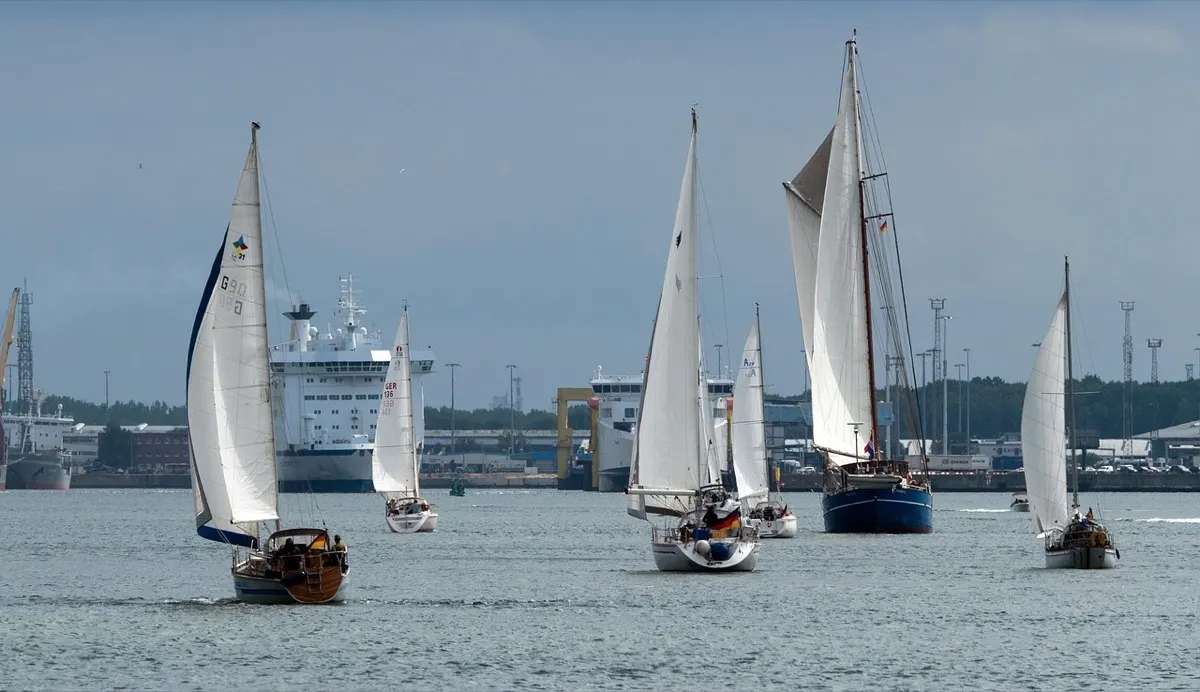
Where the COLREGs apply
The right of way rules at sea are the International Regulations for Preventing Collisions at Sea, 1972, known as the COLREGs. The IMO adopted them in 1972 and they have been in force since 15 July 1977. The US Coast Guard publishes them as the Navigation Rules, and the same rules are often called the rules of the road. For cruising sailors the key part is Rules 12 to 18, all covered below.
- Where: the COLREGs apply to all vessels upon the high seas and in all waters connected with them that are navigable by seagoing vessels (Rule 1 a). That includes your charter area in Croatia, Greece or the Caribbean.
- Local rules: authorities may make special rules for roadsteads, harbours, rivers and lakes (Rule 1 b). US inland waters, for example, have their own Inland Rules. Check the pilot book or harbour guide for your area.
- Racing: between boats that are racing, the Racing Rules of Sailing from World Sailing apply. Towards every other vessel the COLREGs still apply.
Key terms
| Term | Meaning | Rule |
|---|---|---|
| Sailing vessel | a vessel under sail, provided its engine, if fitted, is not being used | 3 c |
| Power-driven vessel | any vessel propelled by machinery, including a sailing yacht under engine | 3 b |
| Port tack | wind on the port side, boom out to starboard | 12 |
| Windward and leeward | windward is the side opposite the mainsail, leeward the side it is carried on | 12 b |
| Give-way vessel | must take early and substantial action to keep well clear | 16 |
| Stand-on vessel | keeps her course and speed | 17 |
The definition of windward matters. The COLREGs do not ask where you think the wind is coming from, but on which side the mainsail is carried. On a dead run, with the wind almost directly astern, that is the only reliable guide.
Which side is port and which is starboard, how to remember it and why the port sidelight is red is explained in our guide to port and starboard.
Two sailing boats: port tack and windward give way
Rule 12 covers two sailing vessels approaching each other with a risk of collision. It has exactly three cases:
- Wind on different sides: the boat with the wind on her port side keeps out of the way of the other (12 a i). In short: port tack gives way to starboard tack.
- Wind on the same side: the boat to windward keeps out of the way of the boat to leeward (12 a ii).
- In doubt: if you are on port tack, see a boat to windward and cannot tell for certain which side her wind is on, you keep out of the way (12 a iii).
Red: gives way. Blue: stand-on. The line on each boat is the boom. Simplified diagram.
Every tack changes which tack you are on, and with it who has to keep clear. How to tack and gybe safely is in our guide to tacking and gybing.
Overtaking: the overtaking vessel keeps clear
Rule 13 applies notwithstanding the other steering rules, so it also overrides Rule 12 and Rule 18. A vessel is overtaking when she comes up with another from a direction more than 22.5 degrees abaft her beam. At night she would see only the other vessel's sternlight and neither of her sidelights. If you are in any doubt whether you are overtaking, assume that you are. A later change of bearing does not turn the overtaking vessel into a crossing one: the duty to keep clear lasts until she is finally past and clear.
This works both ways. If your sailing boat is faster than a slow motorboat in a strong breeze and catches her up from astern, you give way. If a fast motor yacht comes up from astern, she gives way, even if you are motoring.
Sailboat, motorboat, fishing boat: who gives way to whom?
When different kinds of vessel meet, Rule 18 applies. It ranks vessels by how well they can get out of the way. Each vessel gives way to every type above it:
| Vessel | gives way to | day shape |
|---|---|---|
| not under command, e.g. after rudder failure | nobody under Rule 18 | two black balls in a vertical line |
| restricted in ability to manoeuvre, e.g. dredger, cable layer | nobody under Rule 18 | ball, diamond, ball |
| engaged in fishing with nets or trawl | the two above, so far as possible | two cones, points together |
| sailing vessel | the three above | none |
| power-driven vessel, including a sailboat under engine | all of the above | sailboat under engine: cone, point down |
There is also the vessel constrained by her draught, showing a black cylinder: every vessel other than one not under command or restricted in her ability to manoeuvre must avoid impeding her safe passage (Rule 18 d). A boat fishing only with trolling lines is not a vessel engaged in fishing under Rule 3 d.

Rule 18 applies except where Rules 9, 10 and 13 say otherwise. For sailors that means:
- Narrow channel (Rule 9): a sailing vessel, and any vessel under 20 metres, must not impede a vessel that can safely navigate only within the channel. Keep to the starboard side of the channel. Where the channel runs is shown by the buoys, see our guide to channel markers and buoys.
- Traffic separation scheme (Rule 10): cross on a heading as nearly as practicable at right angles to the direction of traffic. A sailing vessel must not impede a power-driven vessel following a traffic lane.
- Overtaking (Rule 13): see above, it always applies.
Under engine: two power-driven vessels
As soon as your engine is running, you follow the rules for power-driven vessels, even with sails still up. That adds two more cases:
- Head on (Rule 14): both alter course to starboard and pass port to port.
- Crossing (Rule 15): the vessel that has the other on her own starboard side keeps out of the way and, if possible, avoids crossing ahead of her.
Power-driven vessels signal their manoeuvres by sound (Rule 34): one short blast means "I am altering my course to starboard", two short blasts "to port", three short blasts "I am operating astern propulsion". At least five short and rapid blasts mean: I do not understand your intentions, or I doubt you are taking enough action to avoid a collision.
Decision helper: who gives way?
Choose your boat, the other vessel and the situation. The helper tells you who gives way and under which rule.
Decision helper: who gives way?
The helper sums up COLREGs Rules 12 to 18. It does not replace a proper lookout: narrow channels, traffic separation schemes and harbours have extra rules.
How to give way properly: 5 steps
- Keep a lookout. Every vessel must at all times keep a proper lookout by sight and hearing (Rule 5). Your own sails hide part of the view, especially the genoa to leeward.
- Watch the bearing. If the compass bearing of an approaching vessel does not appreciably change, risk of collision exists (Rule 7). On board a stanchion works as a simple reference mark.
- Work out your role. Are you the give-way or the stand-on vessel? The diagrams and the helper above make that quick. If in doubt, assume you give way.
- Act early and clearly. Action to avoid collision must be positive, made in ample time and large enough to be readily apparent to the other vessel (Rule 8). Avoid a succession of small alterations. Passing astern of the other boat is usually the cleanest solution.
- Stay alert as stand-on vessel. Hold course and speed so the other vessel can read you. If she does not keep clear you may act yourself, and when it gets close you must (Rule 17).
Above all sits Rule 2: nothing in the rules excuses you from ordinary good seamanship, and you may depart from them to avoid immediate danger.
Common mistakes
- "Sail always has right of way." Only over power-driven vessels, and not when overtaking, in a narrow channel or in a traffic separation scheme.
- "With sails and engine I am still a sailboat." No, with the engine running you are a power-driven vessel (Rule 3 c).
- "Give way to the right, like on the road." Something like that only applies between two power-driven vessels crossing (Rule 15). Between sailing boats the wind side decides.
- "The stand-on vessel does nothing." She must keep watching and act if needed (Rule 17 b).
- "Any fishing boat has priority." Only a vessel fishing with nets, lines or trawls that restrict her manoeuvrability. A boat trolling lines does not count.
At night and in restricted visibility, lights and sound signals come into play. How wind and sea change the picture is in our guide to the Beaufort scale. What single signal flags mean, such as A for a diver down, is in our guide to nautical flags.
Log close encounters
An incident at sea belongs in the logbook: time, position, course, wind and what happened. What a good logbook looks like is explained in our guide to keeping a sailing logbook. In SeaMemo, GPS tracking records every leg with route, nautical miles and speed, and in the journal you add what happened along the way, with a photo. Your whole crew can add entries.


Sources
- IMO: Convention on the International Regulations for Preventing Collisions at Sea, 1972: adopted 1972, in force since 15 July 1977
- IMO: Preventing collisions at sea: overview of the steering and sailing rules
- IALA COLREG: Rule 12, sailing vessels, Rule 13, overtaking and Rule 18, responsibilities between vessels
- World Sailing: Racing Rules of Sailing
- Wikipedia: International Regulations for Preventing Collisions at Sea
Get SeaMemo for free
Logbook, travel journal and crew in one app. For iPhone and Android, works offline at sea.


Frequently asked questions
Does a sailboat always have right of way over a motorboat?
No. A power-driven vessel must keep out of the way of a sailing vessel (Rule 18), but not when the sailing boat is overtaking (Rule 13). In a narrow channel and in a traffic separation scheme a sailing vessel must not impede larger vessels that can only navigate safely there (Rules 9 and 10). And a sailing vessel itself gives way to vessels fishing, restricted in their ability to manoeuvre or not under command.
Who gives way between port tack and starboard tack?
The boat on port tack, with the wind on her port side, keeps out of the way of the boat on starboard tack (Rule 12 a i). If both are on the same tack, the windward boat keeps clear of the leeward boat (Rule 12 a ii).
How do I tell which tack I am on downwind?
Look at the mainsail. The COLREGs define the windward side as the side opposite to the one on which the mainsail is carried (Rule 12 b). If your boom is out to starboard, you have the wind on your port side.
Is a sailboat under engine a sailing vessel?
No. A sailing vessel is one under sail with its propelling machinery, if fitted, not being used (Rule 3 c). As soon as the engine is running, even with sails up, you follow the rules for power-driven vessels. By day you show a cone, point down, forward (Rule 25 e).
What does the stand-on vessel have to do?
Keep her course and speed at first. She may take action herself as soon as it becomes apparent that the give-way vessel is not acting, and she must act when collision can no longer be avoided by the give-way vessel alone (Rule 17).
Do the COLREGs apply when racing?
Between boats that are racing, the Racing Rules of Sailing from World Sailing apply. Towards all other vessels, such as ferries, fishing boats or cruising yachts, the COLREGs still apply.